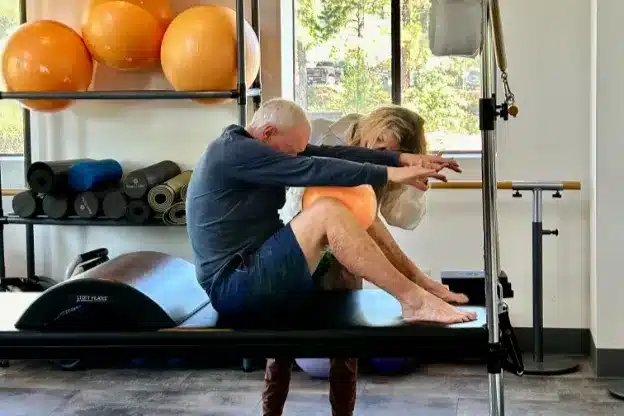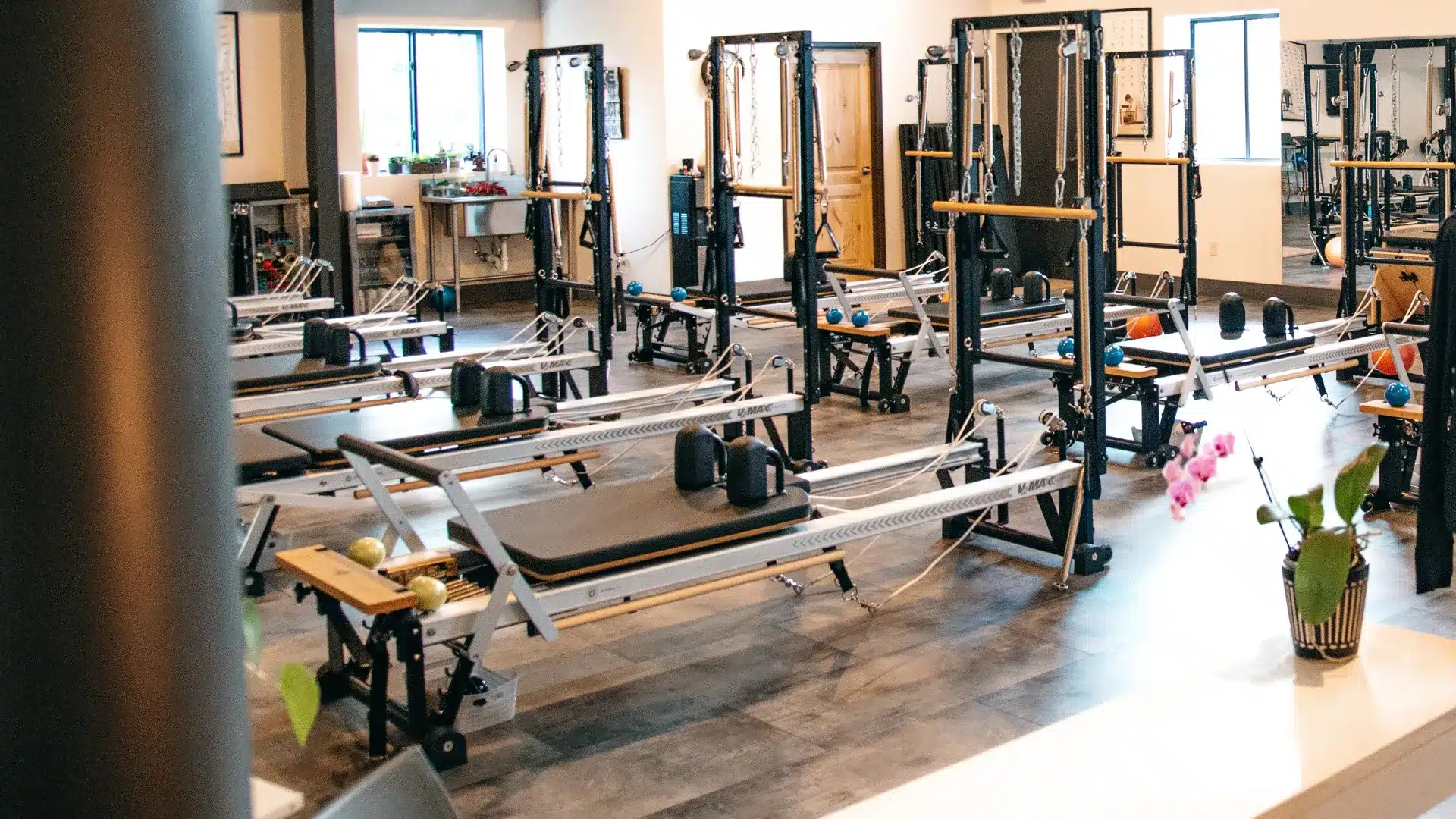
Joseph Pilates developed a method of movement he called Contrology, a system designed to restore and strengthen the body while uniting mind and body through precise, conscious control. This work began as floor-based exercises, now known as Mat Pilates, and was first created during World War I and II as a way to help rehabilitate and realign the spine and entire body. Drawing on his background in yoga, gymnastics, boxing, and performing arts, Joseph Pilates continued refining his method after immigrating to New York. In the 1920s, he developed his first major piece of equipment in his New York City studio: the Reformer, which he referred to as an apparatus rather than a “machine.” Over time, he designed additional apparatuses, including the Wunda Chair, Spine Corrector, Cadillac, and Ladder Barrel. These remain, with modern refinements, the primary equipment used in comprehensive Pilates practice.
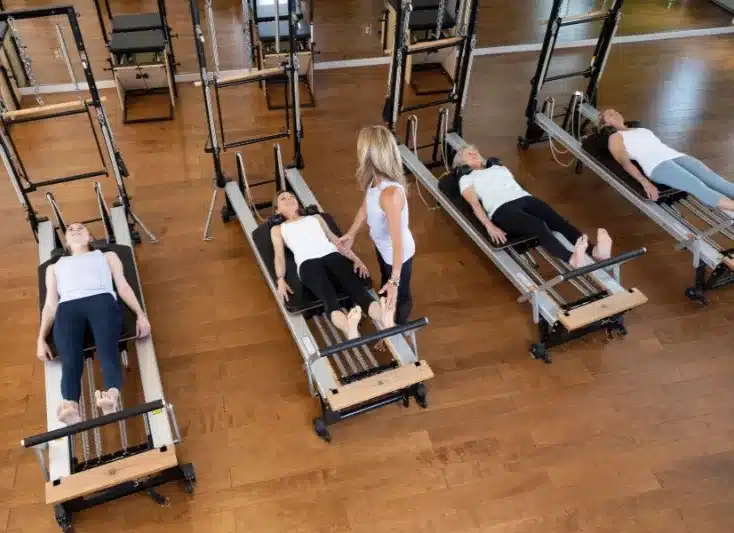
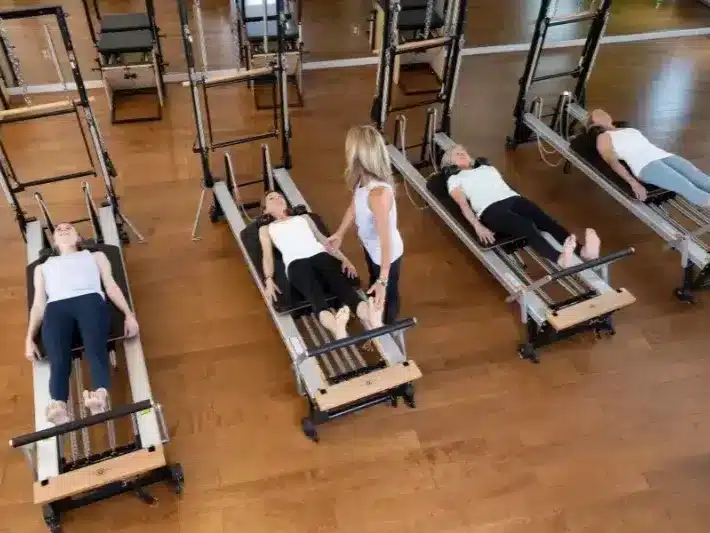
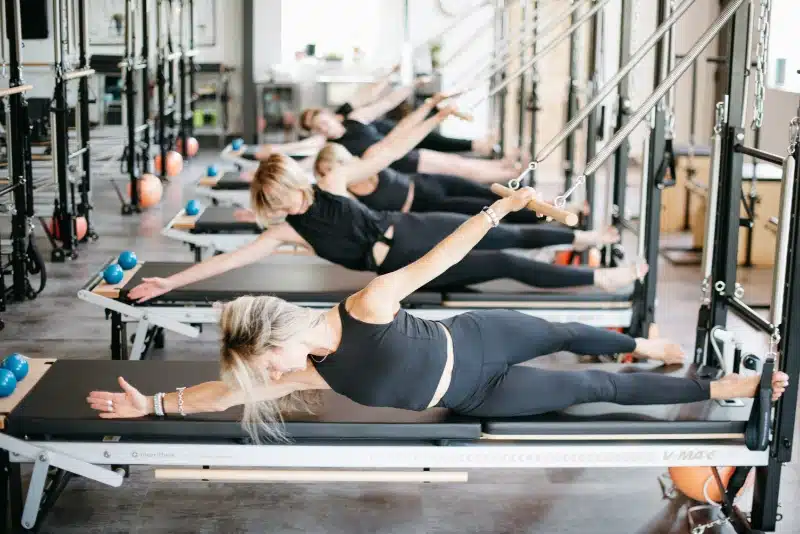
The Reformer is a bed-like frame with a moving platform (carriage), springs for adjustable resistance, a foot bar, and straps or handles. This setup provides powerful feedback through the entire kinetic chain, challenging stabilization and control while allowing for supported mobilization of the spine and joints. While Mat Pilates can be extremely demanding in terms of control and body awareness, the Reformer offers both support and resistance, helping practitioners feel and integrate the core principles of the method more clearly.
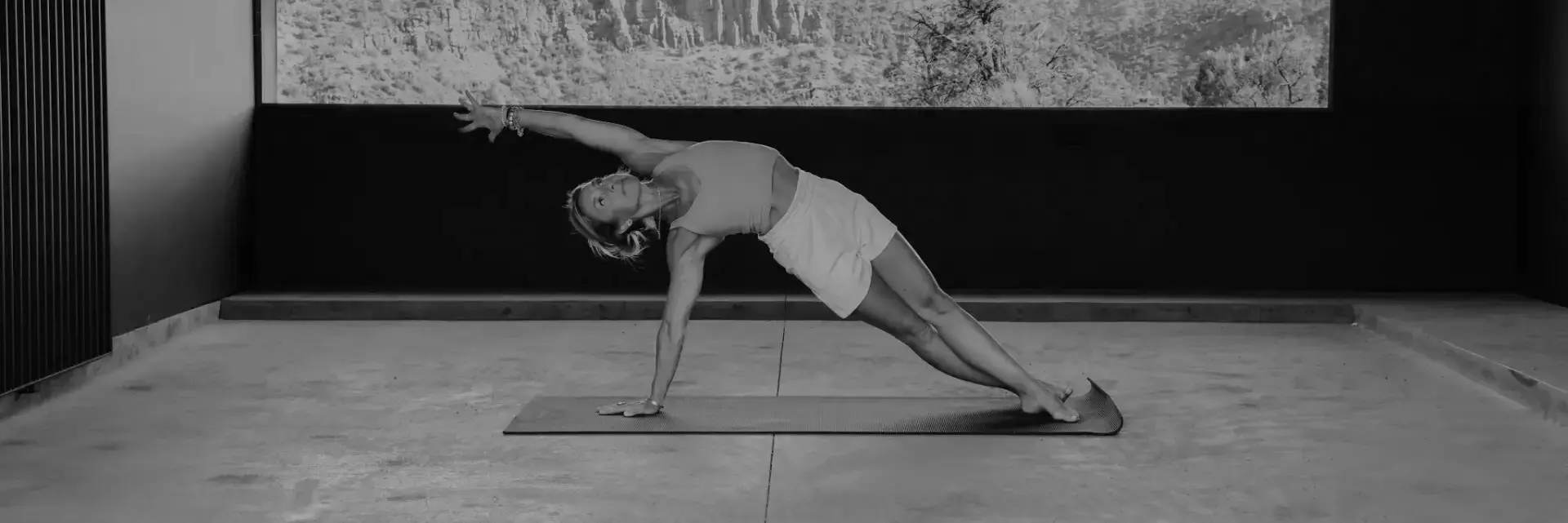
In the classical approach, students were traditionally introduced to the Mat repertoire first in order to learn the fundamental principles of breathing, alignment, concentration, and mind–body connection. Only then would they progress to the Reformer and other apparatus, where similar movement themes are explored with added resistance, assistance, and range. Across the mat and all apparatus, many exercises share common patterns and intentions; the essence of the movement remains familiar even as the environment changes.
Today, Reformer Pilates is widely used for rehabilitation, athletic conditioning, and general fitness, valued for its ability to develop strength, control, flexibility, and postural alignment in a low‑impact, highly adaptable way.