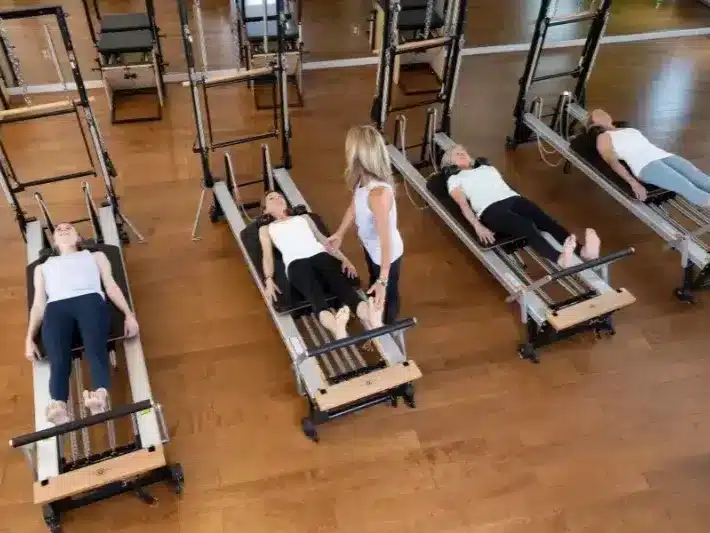
Yes. A private Pilates session before starting group classes is not required, but it is strongly recommended for safety, confidence, and results.
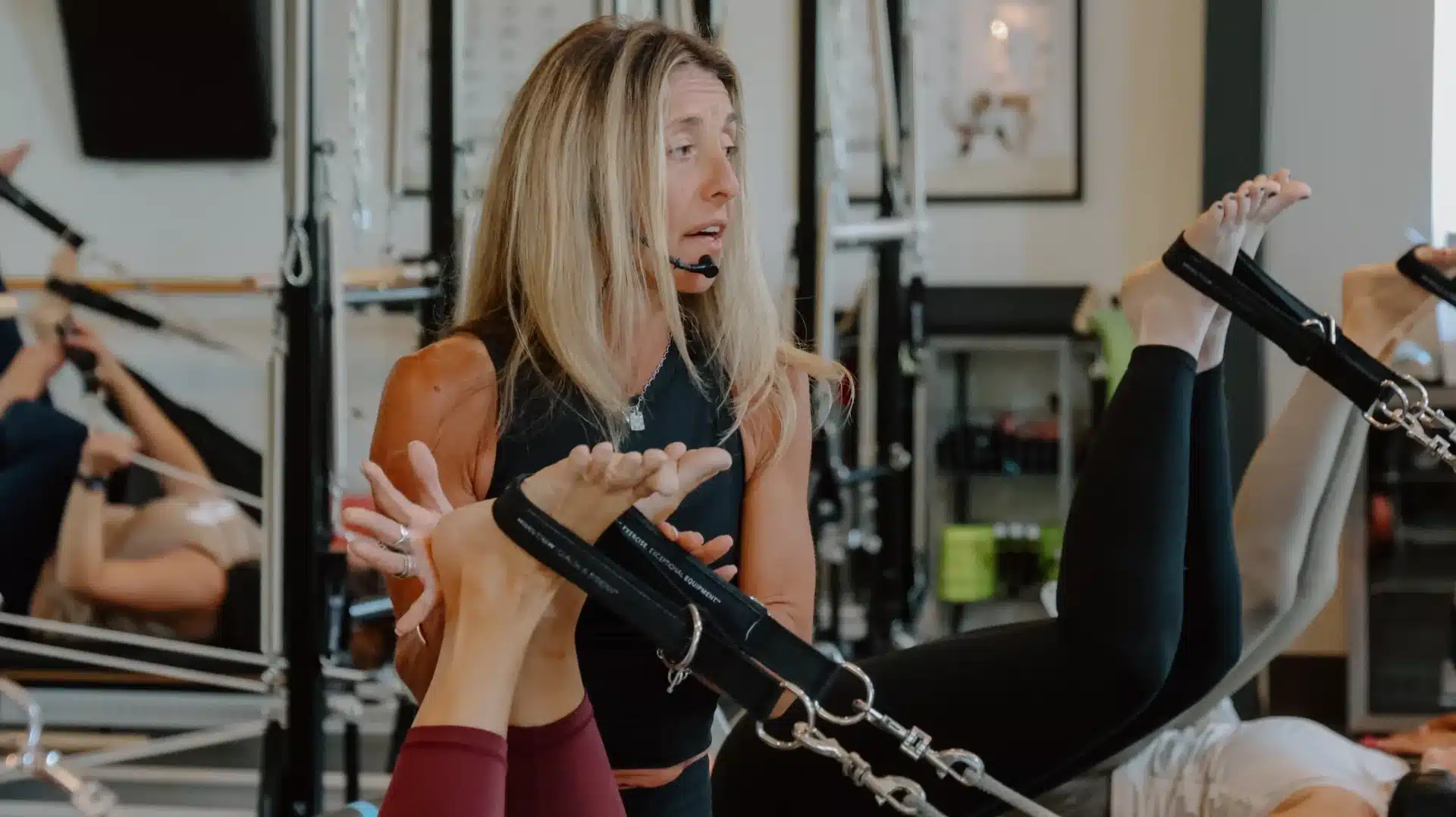
A private gives you focused time to learn the foundations of Pilates: breath, core activation, spinal alignment, and how to use the equipment safely. You and the instructor can identify your unique movement patterns, strengths, and weaknesses so exercises are tailored to your body rather than “one-size-fits-all.” You also build confidence with terminology, cues, and setups so you can join a group class feeling prepared instead of overwhelmed.
In a private session you learn the core principles—breath, concentration, control, precision, flow, and centering—as well as key alignment points such as pelvis placement and lumbar support, rib cage and thoracic alignment, cervical and head position, shoulder girdle stability and mobility, and hip, knee, and ankle tracking in weight-bearing work. You discover how to engage the right muscles and stop overusing compensatory ones so you move efficiently instead of “muscling through” exercises.\
If you have pain or an injury, a private session allows for a movement assessment to see where misalignment, compensation, or weakness may be contributing to your symptoms. Your instructor can modify or omit positions and exercises that aggravate your condition and prioritize those that support healing and joint integrity. For anyone rehabbing or “pre-habbing,” three to five private sessions is often ideal to establish safer movement patterns, build awareness about what to avoid in group classes, and create a progression plan that does not flare up old injuries.
As for how many privates to do, one or two sessions can be enough to learn basics and get safety and alignment tips before classes, while three is ideal for most people to learn core principles, address obvious imbalances, and practice the cues you will hear in class so they make sense in your body. Many people then periodically schedule a private as a tune-up to refine form, troubleshoot new issues, or deepen specific skills.
Pilates is designed for longevity and functional movement, not just a workout. Learning how and why your body moves the way it does early on makes every future class more effective and reduces the risk of reinforcing poor patterns. With good foundations, group classes become a powerful way to maintain strength, mobility, alignment, and mind–body connection over the long term.