With so many competing nutrition trends, most people are drowning in information but starving for true, sustainable results. Instead of following the latest diet, the guiding principle here is simple: eat in a way that heals the body, supports your energy, and fits a long-term lifestyle, not a short-term challenge.
About twelve years ago, this stopped being a theoretical topic and became a deeply personal one. After developing multiple autoimmune conditions that affected my entire body for nearly two years, I was advised to try the then-emerging Paleo diet, with the promise that it would solve my health issues. For me, it did the opposite and made my symptoms significantly worse. In the middle of that struggle, a close friend kept encouraging me to try juicing and a primarily plant-based way of eating. At first, I dismissed it because it went against what my medical and nutrition advisors were recommending—until I became desperate enough to reevaluate everything.
In that moment of desperation, I turned inward and asked God what I needed to do to truly heal. The answer that came was “go back to the garden.” Interestingly, this was exactly what my friend had been telling me all along. I began with a five-day water fast, then slowly reintroduced fresh juices and a primarily vegetarian, plant-focused diet. Over time, this approach helped calm my system, heal my gut, and reverse my autoimmune symptoms. As my body recovered, I dove into more research to understand why this way of eating was working when other methods had failed.
What I learned was the importance of the body’s internal pH balance and how a more alkaline, plant-rich diet can support healing, gut health, and overall function. I also began to question the “protein myth”—the common belief that most adults need very high amounts of protein to be healthy. Unless you are very young and training at an extremely intense level, your protein needs are often much lower than popular culture suggests. In my own life, I maintain a highly demanding physical and mental schedule, teaching and cuing movement 10–12 hours a day and constantly problem-solving clients’ pain and patterns. At 45, I feel more vibrant and energized than ever, and I attribute a large part of that to my nutrition: a mostly juice- and plant-based diet, supplemented with high-quality animal protein from ethically sourced meat my family harvests.
As a culture, we are often overfed and undernourished—taking in plenty of calories but not enough nutrient density. The chronic diseases so prevalent in our society are often linked to overeating and poor-quality food rather than genuine nutritional abundance. When it comes to eating, the mindset that helps me most is seeing food as fuel and medicine, not just comfort or entertainment. Every time I eat, I aim to nourish my body rather than simply silence my hunger.
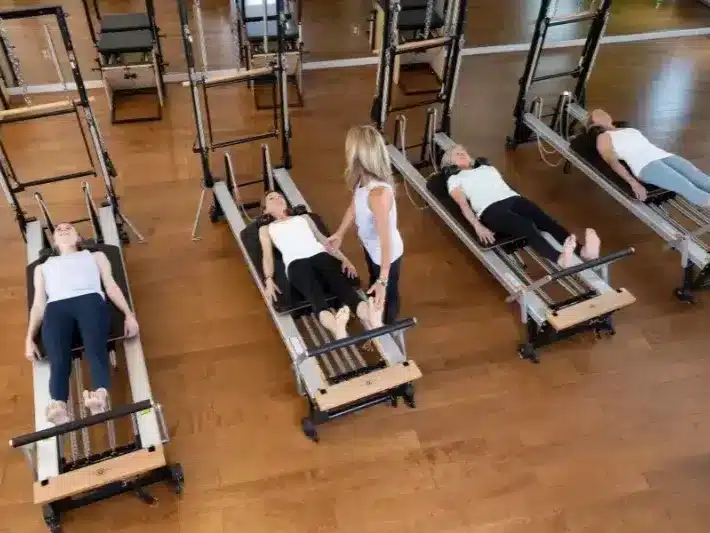
Practically speaking, what I eat is actually quite simple. I do not graze all day. Most days I start with coffee and, depending on my schedule, I may have an egg with sprouted grain toast. I usually leave the house with a fresh juice or green smoothie I’ve prepared for the day. I often teach straight through my daytime hours and might have a small energy or nutrition bar, then eat the bulk of my food later in the day. When clients ask how Pilates ties into all of this, one of the first things I point out is the natural mindset shift that happens with regular practice. After a period of consistent Pilates, many people start feeling longer, lighter, and more connected to their bodies. As that happens, heavy, overly processed foods become less appealing, and they often begin to crave fresher, lighter, more vibrant foods almost without forcing it.
Instructors, in particular, often gravitate toward plant-based or juice-heavy eating patterns. That is not a rule, but it is a common trend that seems to grow organically out of how Pilates makes us feel. When you feel lengthened, energized, and clear in your body, your relationship with food tends to shift as well. You start choosing foods that match how you want to feel—light, strong, and clear—rather than foods that weigh you down.
When it comes to combining diet and exercise, my first piece of advice is always: start by moving. You do not have to fix everything at once. Often a single, consistent change—a daily walk, a couple of Pilates sessions a week, a commitment to more water and one fresh juice a day—can create a cascade of other healthy decisions. As people move more and begin to connect the dots between posture, breath, and movement, they naturally stand taller and inhabit their bodies differently. When posture changes, presence changes; when presence changes, how you feel about yourself shifts; and when that shifts, the way you eat almost always follows.
Pilates is uniquely powerful here because it is not just about muscles; it is about identity, confidence, courage, and the connection between mind, body, and breath. Many people experience an internal transformation through Pilates that changes how they see themselves from the inside out. Once that begins, healthier food choices often arise from genuine self-respect rather than external pressure.
This is why “dieting” rarely works long term. Traditional diets are usually rooted in restriction, shame, or a quick-fix mentality. There is so much emotion tied to food that purely willpower-based approaches tend to crumble. Real, lasting change comes when you transform how you feel about yourself first. When you view your body with respect, gratitude, and love, you naturally want to feed it in ways that support energy, health, and longevity. From that place, eating in a way that helps you feel toned and lean is no longer punishment—it becomes an expression of self-care and appreciation for your life and health.